
How to Choose a Documentary Template for Faceless Video
Pick the template style that matches your topic, evidence, pacing, and viewer expectation.
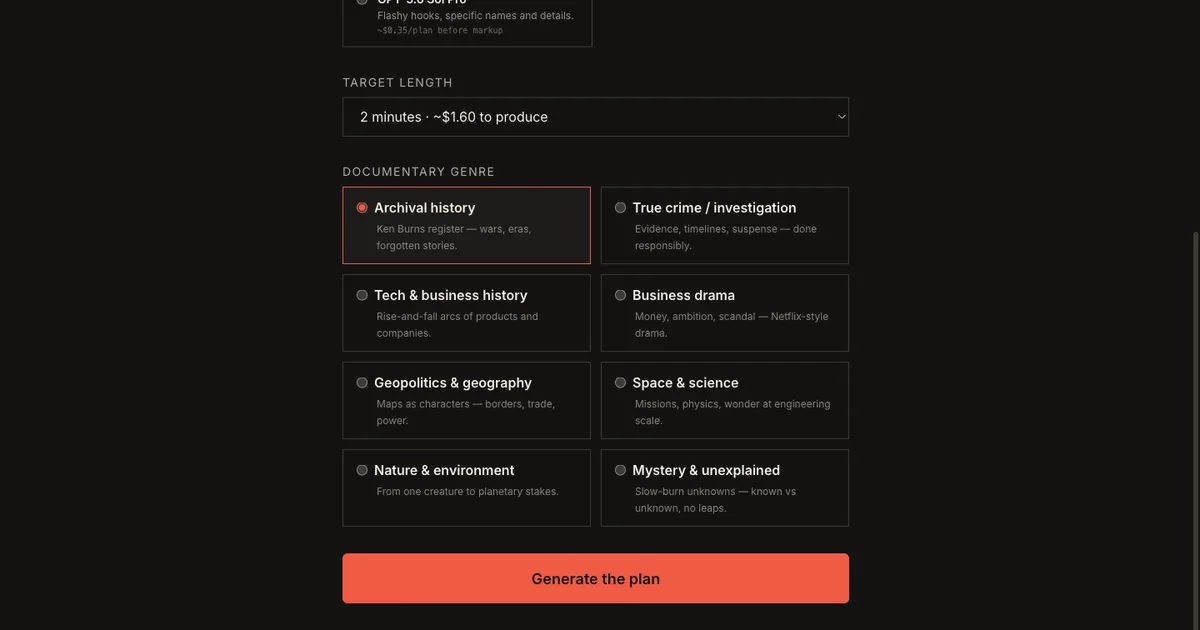
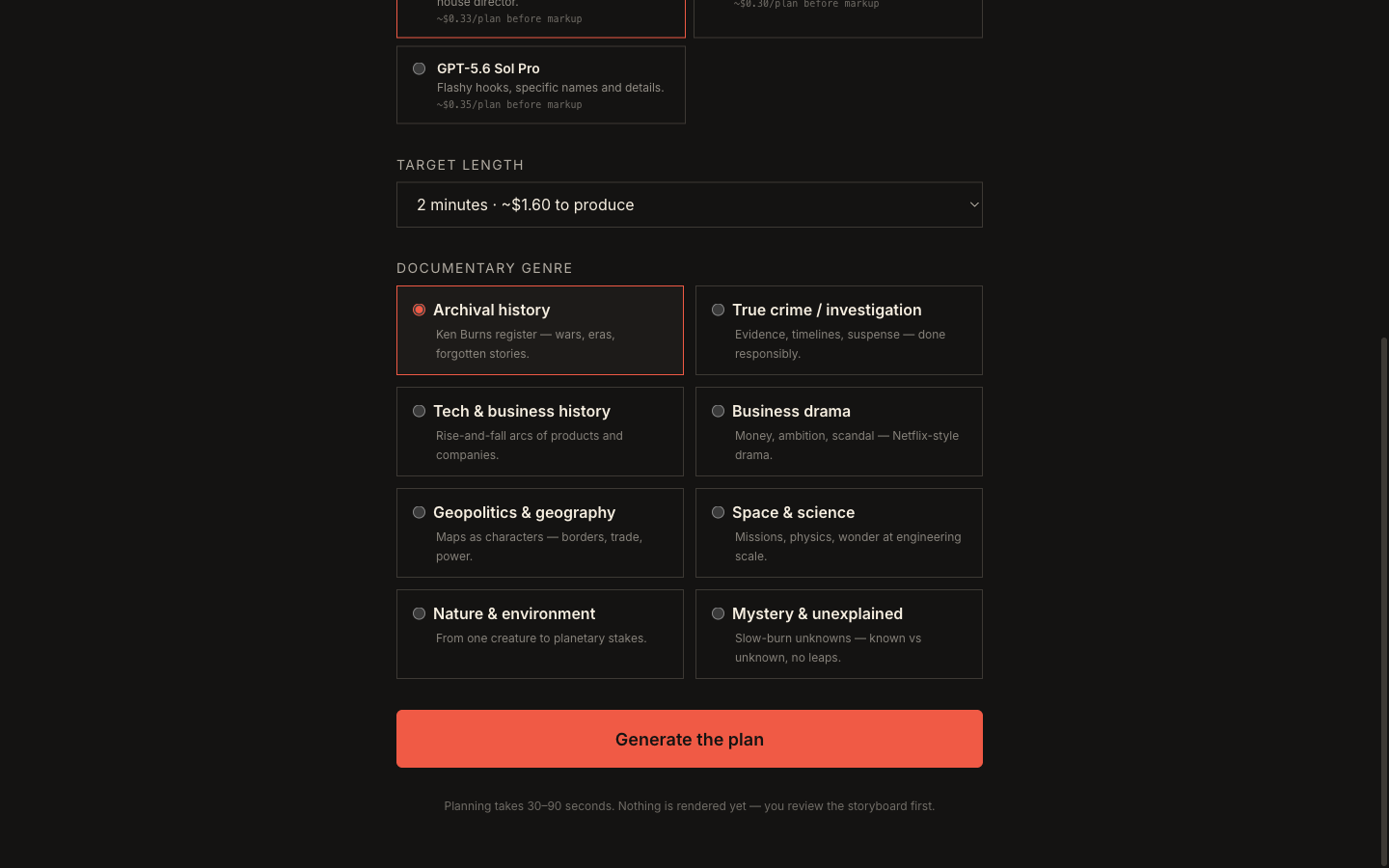
Choose a documentary template by matching the story’s evidence, pacing, argument, and viewer expectation. Editorial fits thesis-led explanations, business fits incentives and numbers, documentary fits tension and consequence, and systems fits routes and mechanisms. The template should establish a useful visual grammar without forcing every topic into the same film.
Use editorial for argument-led topics
Choose an editorial style when the video needs a clear thesis and supporting chapters. This works well for policy, cities, social change, and culture.
The visuals should make the argument easier to follow: maps, charts, timelines, and clean chapter transitions.
Use business for market stories
Business topics need clarity around incentives, numbers, strategic choices, and consequences. A WSJ-style structure can help because it expects evidence, quotes, comparisons, and market context.
Use this for company breakdowns, founder choices, industry shifts, and product strategy.
Use documentary for tension and consequence
Faceless documentary templates work best when the topic has stakes. A failure, mystery, collapse, comeback, or hidden cost naturally creates narrative movement.
The visual language can be more cinematic, but it should still support the story.
Use systems for maps and bottlenecks
Systems videos are about how things work. Logistics, transport, infrastructure, geopolitics, and supply chains all benefit from maps, route lines, constraint diagrams, and operational timelines.
This template is strongest when the viewer needs to understand relationships across time and place.
Turn the framework into a project.
Open Veedyoo and turn your next faceless video idea into a structured production workflow.
Create account